British funding gap: where small businesses are abandoned
7 mins read

British funding gap: where small businesses are abandoned


It has been a few years old for small businesses, but there are instant hopes on the horizon. In early 2025, the British economy recorded a growth of 0.7% – the fastest among G7 countries. After a slow period of progress and financial uncertainty, this careful optimism
is the news that is welcomed for businesses throughout the country. However, while the broader one
Economic picture improves, the reality on the ground for many small and medium people
Business (UKM) is more nuanced.

Navigating the loan landscape today is indirect. Between developing funding options, increasing supervision from lenders, and increasing competition, it is clear that access to finance and working capital is not the same on all boards. That’s why we are here in Swoop Funding departing to understand exactly how small businesses have fate. Using internal data from more than 114,000 businesses, we have seen closer where funding grows, who gets it – and, most importantly, who is left behind.

Where is the successful funding by growing the fastest?

You might expect a neatly lined up funding hotspot with the British main economic center. But our data reveals a surprising trend: this is a less known location that sees the biggest leap in a successful funding application. Take barking, for example, which has increased 6,150% in successful funding, even from a low base. Following the back is:

  • Stoke-on-Trent-5,538%
  • Farnham – 4,100%
  • Sunderland – 3,608%
  • Stockport – 2,414%

On the other hand, a more traditional business center has been completely seeing investment reduction:

  • Manchester -41%
  • London —31%
  • Birmingham -80%

These numbers indicate that small cities and cities began to attract more funding opportunities that were adjusted or more utilizing local initiatives. While London and Manchester remain a very large power plant, their decline in funds may signify a shift towards decentralized support for small businesses.

Start-up vs. established business: Who is funded?

When it comes to age, start-up absorbs the largest part of capital. Business aged between 0-5 years has received more than £ 30 million in funding-more than double the business aged 11-15 years (£ 12.4 million).

Meanwhile, as the business age increases, the number of sharp funding significantly:

  • 11-15 years: £ 12.5 million
  • 16-20 years: £ 4.1 million
  • 26-30 years: £ 1 million
  • 36-40 years: £ 0.6 million

Decreased steep in funding with age is not always a bad thing. Older businesses often have more established cash flow, stronger credit history and existing relationships with lenders. But it highlights how important capital is the initial stage of how vital funding is in formative years for new businesses.

Which industry receives the most funds?

Deep dive into the data sector described a clear picture of where investment flows – and where it is lagging behind:

  1. Professional, Scientific & Technical Services – £ 14.8 million
  2. Manufacturing – £ 7.9 million
  3. Wholesale & retail trading, vehicle repair – £ 7.5 million
  4. Administrative and Support Services – £ 6.5 million
  5. Construction – £ 5.8 million
  6. Real estate activities – £ 5.6 million
  7. Information and communication – £ 4.95 million
  8. Accommodation and food services – £ 4.7 million
  9. Human health and social work – £ 4.3 million
  10. Finance and insurance – £ 3.6 million

Professional, scientific, and technical services leading, with manufacturing and retail followed in the back-the possibility of being driven by a sustainable post-chandelian retail recovery and joint government encouragement to infrastructure to help stimulate growth.

Meanwhile, traditional industries such as transportation and education – are both outside the top 10 – traces behind. These figures indicate a smooth shift in tastes, with service-based and digital-first businesses. These numbers can shift in various ways because of the impact of tariffs from the US during the coming years.

Where is the business rejected?

Not all success stories. Our data also shows where the funding application falls flat – and the highest number in the largest cities in the UK.

  • London – £ 97.8 million in rejected funding
  • Manchester – £ 10.1 million
  • Birmingham – £ 7.6 million
  • Glasgow – £ 5.7 million
  • Leeds – £ 4.6 million
  • Cardiff – £ 4.5 million

This high level of rejection can reflect the volume of applications that are solely in a dense populated area, but they also suggest the incompatibility between the funds sought and what is willing to offer the lender. Business in this field may require more support to identify the right type of finance – or strengthen their applications to increase their approval opportunities.

What types of funds are received?

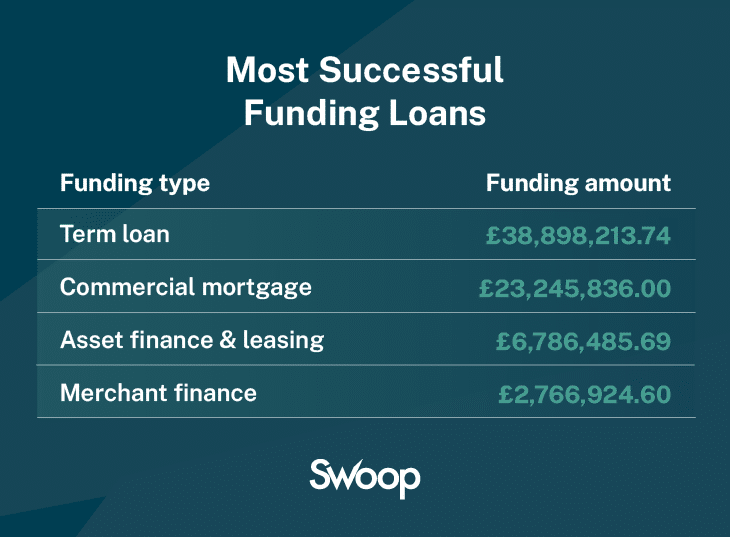
When we break it based on the type of funding, we see some patterns appear. Futures and commercial mortgage loans dominate the market, contributing around £ 62 million from the funds received. This is enough to fall later for the finances of assets and leasing (£ 6.8 million) and venture capital (£ 3.5 million). Startup loans raise the back – with only £ 25,000 funds given.

Exploring the sectors most funded by the region, London remains a pioneer of funds in many sectors, but other cities punched on their weight in certain industries. This is how wholesale and retail funds are damaged:

  • London – £ 1.3 million
  • Preston – £ 0.28 million
  • Holywell – £ 0.25 million

While there is a different picture in real estate activities:

  • Wadebridge – £ 2 million
  • London – £ 1.2 million
  • Horsham – £ 0.5 million

While London led, many other cities showed a strong-on-on-trrent momentum in finance, longhope in the field of manufacturing, solihull far in front of the package in accommodation and food services. This regional spread is encouraging and suggests a slow but stable funding leveling.

These findings offer valuable windows into the experience of the real world funding UKM UK. While the economy gained strength, small businesses still navigate uneven terrain when coming secure finances. That is why understanding where the gap is – and how to close it – very important.

At Swoop, we believe that there is no business that must lose funds due to lack of guidance or support. Our platform is designed to connect business with the right funds for their specific needs, whether they are just starting or improving.

The top five tips for increasing your funding trip

  1. Know what you asked for
    Adjust your application to the right funding product. Term loan Is not one measure for all alternative-explores such as finance assets, financial invoices or equity if they are in accordance with your needs better.
  2. Get applications
    The lender wants to see a clear and confident business plan, realistic projections and solid track records (but short) when considering financing. Need help? We UKM Financial Guide is a good starting point.
  3. Strengthen your financial story
    Good credit, neat accounts and tax submissions on time are very helpful. For start-up without trading history, personal credit can play an important role-try to maintain that cleanliness as well.
  4. Be strategic with time
    Avoid applying during seasonal decline or cash flow period. Conversely, build a track record and lender approach when your book looks strong.
  5. Use a platform that does hard work
    Navigating the lender manually is difficult – we understand. That’s why Swoop exists: to make weight lifting and bring opportunities that are adjusted to your inbox.

Our methodology

This report is the result of comprehensive internal analysis conducted by Swoop funding. Data was taken from more than 114,000 British businesses.

Article source*

collapse
expand

Swoop requires writers to use primary sources to support their work. This includes white paper, government data, original reporting, and interviews with industrial experts. We also refer to the original research of other prominent leading publishers.

*Britain has the third most powerful G7 growth in 2025, IMF estimates

News
Berita
News Flash
Blog
Technology
Sports
Sport
Football
Tips
Finance
Berita Terkini
Berita Terbaru
Berita Kekinian
News
Berita Terkini
Olahraga
Pasang Internet Myrepublic
Jasa Import China
Jasa Import Door to Door

Leave a Reply

Your email address will not be published. Required fields are marked *